
Geotechnical service
Ground Improvement
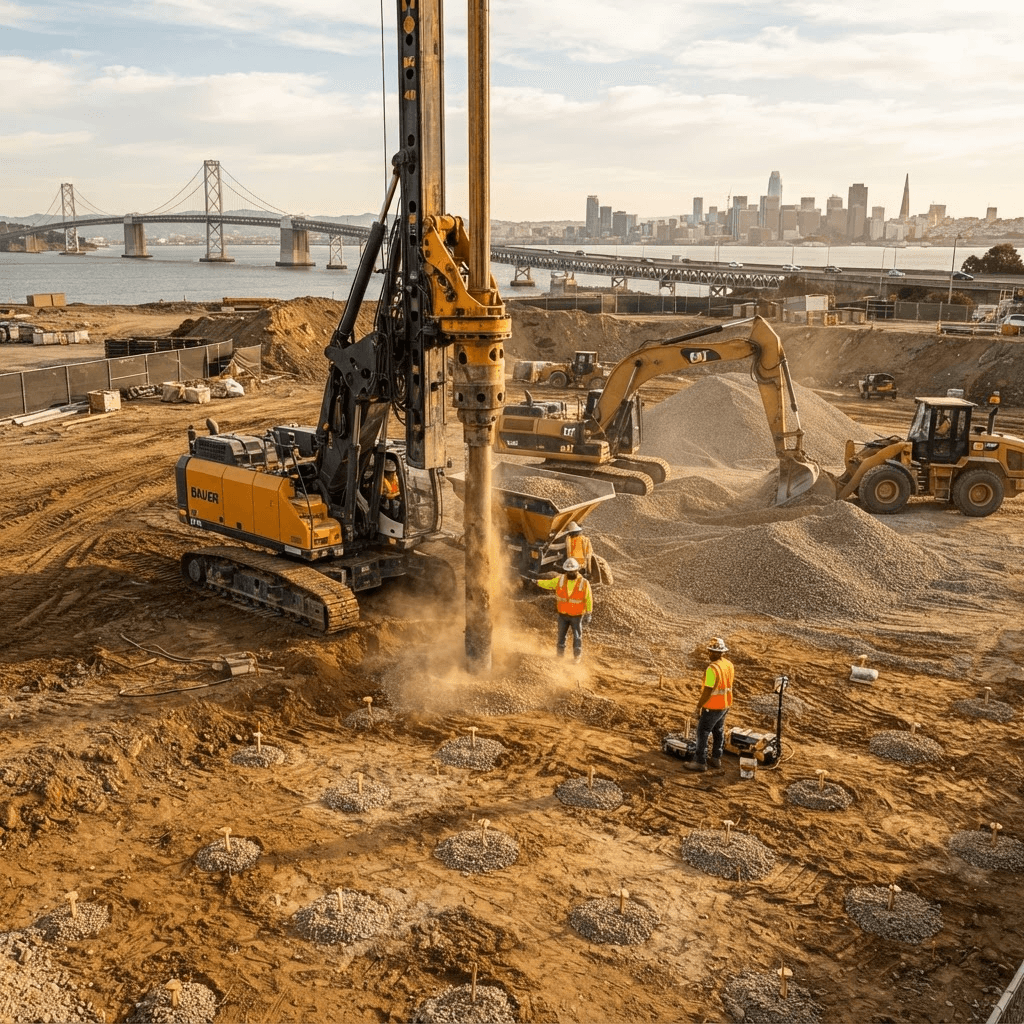
When the ground is not strong enough as-is, improving it can be far cheaper than deep foundations. We evaluate and design ground-improvement systems that increase bearing capacity, control settlement, and mitigate liquefaction — turning soft, loose, or filled sites into buildable ones.
What's included
- Stone columns / aggregate piers for bearing and settlement control
- Compaction and permeation grouting
- Dynamic compaction for loose granular fills
- Deep soil mixing and cementitious stabilization
- Liquefaction mitigation design
- Improvement verification and QA testing programs
What you receive
- Ground-improvement design and layout
- Performance and acceptance criteria
- Verification testing program
- Construction observation scope
When you need it
Ground improvement makes sense when shallow soils are weak or liquefiable but deep foundations would be costly — common on former industrial sites, engineered fill, and bay-margin parcels. We compare improvement against deep-foundation alternatives on cost and risk.
Ground Improvement — common questions
- Is ground improvement cheaper than deep foundations?
- Often, yes — particularly for slabs, tanks, and lightly loaded structures over large footprints. We run the comparison on your site data so the decision is based on real cost and performance, not a default.
- Can ground improvement mitigate liquefaction?
- Yes. Techniques such as stone columns and deep soil mixing densify and reinforce liquefiable soils, reducing settlement and lateral spread. We design the program to the specific liquefaction hazard at your site.
- How is the improved ground verified?
- We specify a verification program — typically CPT, load tests, or grout records — with clear acceptance criteria, and observe construction to confirm the design intent is met.
Related services
Tell us about your site.
Send us the location and what you have planned. You'll get a straight answer on what the ground can carry — and a fixed-fee proposal within 24 hours.