
Geotechnical service
Geohazard Assessment
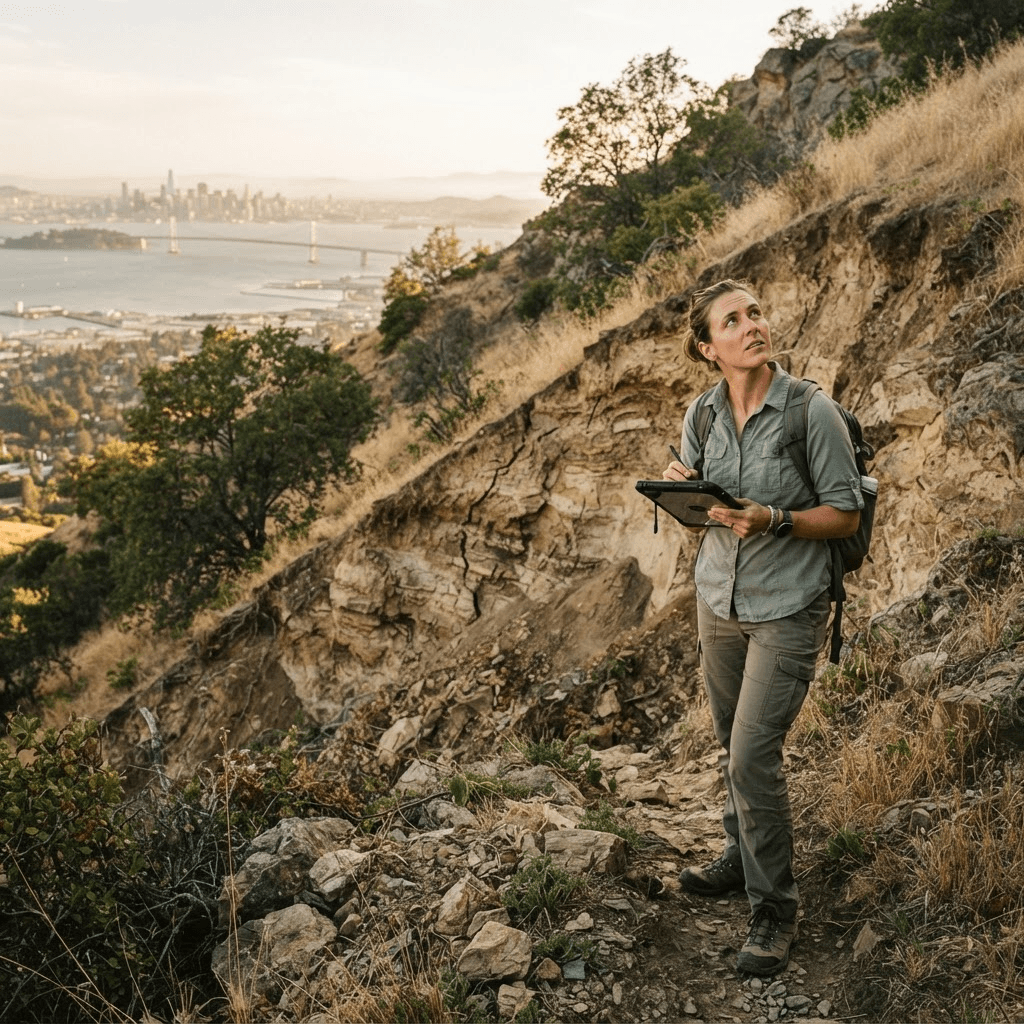
Some of the biggest risks to a Bay Area property never show up in a standard boring log. We assess geologic hazards — landslides, fault rupture, debris flows, expansive soils, and erosion — using geologic mapping, historical data, and subsurface exploration, so you understand and can mitigate the risk before you buy, design, or build.
What's included
- Landslide and slope-instability hazard mapping
- Fault-rupture and Alquist-Priolo zone review
- Debris-flow and rockfall evaluation
- Expansive and collapsible soil assessment
- Erosion and creep evaluation
- Hazard mitigation and monitoring recommendations
What you receive
- Geohazard assessment report
- Hazard maps and geologic cross-sections
- Risk ratings by hazard type
- Mitigation and monitoring plan
When you need it
Order a geohazard assessment during due diligence on a hillside or bay-margin property, before designing on complex terrain, and whenever a jurisdiction flags mapped hazards. Catching a hazard early is far cheaper than redesigning — or litigating — later.
Geohazard Assessment — common questions
- Should I get a geohazard assessment before buying property?
- On any hillside, canyon, or bay-margin parcel, yes. A pre-purchase assessment tells you whether landslide, fault, or expansive-soil hazards will limit what you can build and what mitigation will cost — critical information before you close.
- What is the difference from a standard geotechnical report?
- A geotechnical report focuses on soil properties for foundation design; a geohazard assessment looks more broadly at geologic risks — landslides, faulting, debris flows — that affect the whole site's viability, often using geologic mapping beyond the building footprint.
- Can hazards be mitigated, or do they make a site unbuildable?
- Most hazards can be mitigated with the right design — drainage, setbacks, stabilization, or foundation choices. Our job is to quantify the risk and give you practical, permittable options rather than a simple yes or no.
Related services
Tell us about your site.
Send us the location and what you have planned. You'll get a straight answer on what the ground can carry — and a fixed-fee proposal within 24 hours.